Showing posts with label IPO. Show all posts

Sunday, 8 March 2026

Boustead REIT IPO- 3 Reasons Retail Investors Need To Stay Far Far Away.

Hi Folks, for those who have already subscribed to the Boustead REIT or love Boustead, please do not flame me for this post. This post is based only on my personal view. Strangely, the management of Boustead decided to go ahead to list their REIT when Donald Trump is still fighting a war with Iran- this is no doubt the worst possible time to IPO. On whether one shall subscribe to this IPO, the crux of the issue is not with the expected dividend yield or extent of the aggregate leverage level; It is also not about the low occupancy rate of less than 90%. The paramount consideration needs to go back to a Boustead fiasco back in November 2023 where a low ball buyout offer was made by Boustead to privatise and delist its real estate and engineering subsidiary Boustead Projects from existing shareholders then. Hence, if one does not want to lose his or her own hard earn capital, one needs to stay away from this IPO. I will elaborate on the above crux factor as well as another 2 other reasons on why one needs to avoid this subscription.

1. “Management Beliefs” and How Shareholders Are Treated.
First and foremost, Boustead Singapore Limited today is no longer the MNC founded by Edward Boustead in 1828 during the Straits Settlement days. Mr Wong Fong Hui and his family acquired Boustead back in 1996. Mr Wong is instrumental in transforming Boustead into a major engineering and technology conglomerate and is a very good businessman. His family held around 45% shares of Boustead Singapore Limited.

Now, the most uncomfortable factor for me is that in the event that the REIT faced a financial crisis which is part and parcel of the ups and downs of our economy, can it survive without causing much grief to its Unitholders? There may also be pro-longed periods where the REIT may trade at substantial discount to its fair value. One does not want to be in a situation whereby the REIT is being forced to privatise at a huge discount to the IPO price of S$0.88 per unit with a low ball offer. 

Additionally, I am not sure whether you folks recalled a non-government backed REIT called Soilbuild REIT that was listed and delisted- please go google and read up on it.

Basically, many sharp and wealthy businessmen can acquire a business at a less than fair valuation to delist and then a few years later, launch another IPO after re-packaging the investment properties inside. It maybe better to stick with the Capitaland or Mapletree Group of REITs in order to sleep better at night.

The 2023 Boustead Project delisting in a way can arguably be a quick preview of what may come in future for Boustead REIT. The consultant for that delisting even issued an opinion to shareholders then  that the initial offer was “reasonable but not fair”. However, the good news is that the offer was subsequently revised upwards significantly after some commotion. Nevertheless, this gives retail investors like myself some basic understanding of how the management of Boustead does business.  

2. Boustead REIT Mostly Industrial Properties and Low Occupacy Rate Less than 90%.
Another reason to stay away from this IPO is the less than 90% occupancy rate and the high concentration of major tenants for this IPO. In the event that there is a major tenant loss, it will take time and more CAPEX to sub-divide the property into smaller units configuration.

3. US Iran War and High Oil Prices May Bring Back Inflation or Even Recession,
Oil prices are spiking and the inflation monster may rear its ugly head once again. I believe many of you folks who held REITs for the past few years remember the high interest rate environment and the devastating effect on the market price of REITs. Prices of REITs will most likely drop further over the next few months.

Parting Thoughts.
Personally, I will be avoiding the Boustead REIT at all cost not just for this IPO but also in future. I have a very bad feeling on the performance of Boustead REIT post IPO and that this will go down the path of Soilbuild REIT. 

(Updated 9 March 2026: Added in additional information on Soilbuild REIT as readers may takeaway with the wrong impression that Soilbuild REIT and Boustead REIT are related entities.)

Friday, 19 September 2025

Centurion Accommodation REIT IPO- 3 Reasons To Stay Away (Part 2).

Honestly speaking, I think that it is too pre-mature for Centurion to launch their Centurion Accommodation REIT ("CAREIT"). A REIT is supposed to hold investment properties that are stable and has a good historical track record of generating an amount of rental income, so I was very surprised that some of its assets that just came online from development or redevelopment are being pushed directly into CAREIT for a lightning pace listing. For example, there is a student accommodation that is still being developed in UK but will be injected into CAREIT within 6 months after its anticipated IPO date (estimated to be Oct 1, 2025). The management should have waited at least 1 year till end 2026 to allow such newly developed property to be pumped into CAREIT so that it can prove its worth. Then there is also the enigmatic variable called the "Mandai Expanded Capacity" (please see my previous post) that makes the entire prospectus hard to understand due to it being loosely crafted. Seriously, it makes me wonder whether the Centurion management team is facing a dire cash crunch crisis as they seemed desperately in need of cash for working capital and trying so hard to get CAREIT listed on SGX as soon as possible.

1. Investment Property With No Proven Track Record Being Pushed into CAREIT + Weaker Rental Rates across some properties. 

(i) Unstable and concerning lower rental rates for student accommodation?
For dwell Princess Street, dwell Cathedral Campus, dwell Archer House and dwell Hotwells House, there is a reduction in NPI for projected FY2026 and FY2027 relative to FY2024 due to reductions in rental rates. Does this mean that there is a correction in student accommodation rental market or are there issues with the properties? Will this lead to a fall in its other UK properties going forward?

(ii)  Epiisod Macquire Park property in UK still being built but to be pushed into CAREIT upon TOP.
Epiisod Macquarie Park is one of the newer premium student accommodation (PBSA) assets under development by Centurion, and slated to be included in the CAREIT after completion. The problem here is that Centurion should have held on to this property while awaiting it to be more stabilised before injecting it into CAREIT. Instead, it is pushing CAREIT unit-holders to take on the risk of a new property that may not perform as well as expected. 

(iii) 4th block of worker dormitory with 3,696 beds still being developed at Mandai
While this can be termed as an asset enhancement, the fact remains that this is a significant new development in its Mandai property portfolio, and it will need to be filled to match financial projection.

2. Weakness in Financial Strength of CAREIT's Sponsor Centurion.
Unfortunately, despite the fantastic performance in its share price, Centurion Corporation Holdings is still relatively tiny in scale relative to the Big REIT Sponsors in Singapore. Centurion is much smaller compared to heavyweights like Mapletree, CapitaLand, Keppel or Frasers.

Market cap (as of mid-2025) is approximately S$1.1–1.2 billion, versus tens of billions for the mega sponsors.

So in relative terms, Centurion is a mid-cap niche operator and not a “mega-sponsor”. During times of financial crisis of CAREIT, there will always be lingering doubts on the mind of investors on whether Centurion will be able to save its own REIT. There is no free lunch, hence the high distribution yield on offer of around 7.66% to 8.57% in projected FY2026 and FY2027 respectively (based on S$0.88 per share) to entice investors for subscription into CAREIT which reflects the substantial market risk premium. 

3. Workers accommodation is significantly more than student accommodation
This is a huge bugbear for me. Personally, my own view is that student accommodation supporting the education industry is probably the most resilient business out there while worker accommodation industry I thought is rather cyclical in nature that follows the boom and bust of the construction industry. If construction demand slowed down, there is no point in business owner keeping too many workers in the dormitory. I am utterly disappointed that the student accommodation component (even if the sponsor throws in Epiisod Macquire Park) is such a tiny proportion of the entire CAREIT. It is not even 50% of the entire portfolio. My preference would be to wait for a REIT that has 100% holdings in student accommodation.

Only a small fraction is Student Accommodation

Accommodation Industry Is NOT weatherproof
One final thoughts on this point is that since we have just been through COVID, the hard truth is that not even student accommodation industry resilience can save it during times of pandemic but nonetheless, the probability of another pandemic occurring in our lifetime is on the low side based on history.

Parting Thoughts
I am actually lukewarm with regard to my overall feel for this IPO and not particularly excited. With the projected cuts in interest rate and recovery of the REIT market, I think that CAREIT should do fairly well in its IPO given its low leverage ratio of 30% even after targeted acquisition of the newly developed Epiisod student accommodation into its enlarged portfolio- It does gives it additional room for further yield accretive acquisition. Nevertheless, I am still troubled by the weaker financial strength and capabilities of the sponsor during crisis relative to the Singapore government linked sponsors.  

Put it this way, if Mapletree Investments were to list their student accommodation business for IPO, I will definitely be subscribing for it. Summarising, I am going to give this IPO a miss while waiting for a more suitable investment opportunity. 

[P.S: For those interested in CAREIT IPO, note that it opened at 10pm on September 18, 2025 (Thursday) and will close by 12pm on September 23, 2025 (Tuesday). It will commence trading at 2pm on September 25 , 2025 (Thursday).]

Sunday, 6 July 2025

NTT Data Centre REIT IPO- Another Ticking Time Bomb- 3 Reasons to Stay Away.

There is another upcoming data centre REIT IPO on SGX by Nippon Telegraph and Telephone (“NTT”) of some of its data centres in order to raise funding of up to US$864 Mil on SGX. NTT is dangling a big fat carrot of between 7% to 7.5% annual distribution yield to attract investors. One of the cornerstone investors is our own Singapore sovereign wealth fund, GIC which invested US$100 Mil. Nevertheless, my personal view is that NTT data centre REIT will just be another ticking time bomb and I will be staying far away from this REIT for 3 main reasons:
(Please click here for those who preferred the You-Tube version)

1. Handicapped Shareholder/Unitholder Structure in Trust Deed Doomed for Failure.
This is the part that many retail investors got ensnared. All investors can only hold up to 9.8% holdings in NTT Data Centre REIT (with the exception of Sponsor who can hold up to 25%). I have written it many times on the red flag of the exemption on withholding tax for crafting US properties as a REIT structure.
Extract of the restriction on shareholding
Basically, our global economies will go through market cycles. During economic crisis or crisis caused by the REIT itself, the REIT cannot save itself by rights issuance exercise because it will breach the trust deed limitation of 9.8% for individual shareholding. So the banker or the sponsor cannot undertake unsubscribed excess rights which will mean an immediate violation of its own trust deed as well as US tax transparency rule for REIT holdings. Look at what happened to US Commercial Office REITs of MUST, KORE and PRIME on SGX which are unable to do rights issuance and you will understand why they have to do either a fire sales of assets during crisis and/or stop paying out distributions to save itself. 

2. Over Concentration Risk of Key Tenant Making Up 31.5% of Monthly Base Rent.
There is one major tenant, with only a triple B credit rating, which makes up a significant 31.5% overall in NTT Data Centre REIT monthly rental income. If there are defaults, a huge chunk of “stable” rental income distribution to unit-holders will be gone with the wind. Look at what happened to DigiCore REIT and one will understand the impact.
If we are to do an online search on the mysterious identity of this major automotive tenant, 2 names came up with BBB S&P credit rating, that is, either Tesla or General Motors. Both are not exactly in a good financial state if you know what I mean. 

3. Forex Risk- Most of the Assets Are Located in US.
4 out of the 6 injected properties are based in the US and this current data centre REIT is also priced in USD. This will mean a forex risk to SG investors. I am not exactly sure whether this is the right time to be vested in so much US assets especially with the crazy antics by Donald Trump. 

Parting Thoughts- Personal Views
Interestingly, the sponsor has highlighted the low 35% leverage ratio will help NTT Data Centre REIT expand in future. But as alluded to Point 1 above, NTT Data Centre REIT most likely is destined for private placements route  for future acquisition. The problem with such REIT structure is that it can only raise funds from existing unit-holders during good times. During crunch times, retail investors will be faced with severe dilution as the sponsor and management will have to turn to private investors to raise fundings. I thought that folks should look at Mapletree Industrial Trust or Keppel Data Centre REIT if they want to be vested in the data centre business.

Tuesday, 30 November 2021

Digital Core REIT IPO- Exercise Some Caution If One is Venturing into This New Data Centre REIT Crusade.

Coming off the heels of the first REIT IPO (Daiwa House Logistics Trust) on the Singapore Stock Exchange is Digital Core REIT. From the many glorious reviews by many bloggers and cornerstone shareholders such as DBS lining up, we can foretell that Digital Core REIT seems to be on its way to a very smooth and successful listing.  Nevertheless, I am not really excited by it and will not be taking part in its IPO- the reasons I will explain towards the end of this post. Let me start by putting a summary background about this second 100% pure Data Centre REIT that will soon be listed on the SGX followed by some quick highlights of its positive traits. Last but not least, prospective investors should take some caution for this data centre investments instead of thinking that US data centres are one of the safest investments out there- I will elaborate more on this point towards the end of this post.  
 

1.Background:
The initial public offering (IPO) portfolio will comprise 10 freehold data centres in the US and Canada with a total net lettable area (NLA) of 1.2 million square feet (sq ft).

Four of the data centres are located in the Silicon Valley, with another 3 in Northern Virginia, 2 in Los Angeles and 1 in Toronto.

Portfolio occupancy is at 100 per cent with a tenant base comprising blue-chip companies including global cloud providers, global colocation and interconnection providers, social media platforms and IT solutions providers.

Weighted average lease expiry of the portfolio stood at 6.2 years based on base rental income for the month of June or 7.7 years by NLA as at end-June. Its distribution yield is expected to be 4.75% for 1st year and increase to 5.26% by second year.
2. Positive traits for Digital Core REIT IPO
The following are the good points I like about Digital Core REIT IPO:

(i). Sponsor is listed on the New York Stock Exchange and well known.
The sponsor Digital Realty is listed on the NYSE and is well known for its development and operation of data centres. Digital Realty was even involved with the sales of its data centres to Mapletree Industrial Trust in early January 2020. So in a way, we can see the footprints of Digital Realty in Mapletree Industrial Trust.

(ii). Alignment of Sponsor's interest with Digital Core REIT
Post-IPO, Digital Core REIT will have right of first refusal (ROFR) to a potential pipeline of over US$15 billion of data centres - both existing and under construction. Similar to the initial portfolio, the sponsor intends to co-invest in 10 per cent of each of Digital Core Reit's future acquisitions.

(iii). Significant debt headroom of US$596Mil for future acquisition
Digital Core REIT is expected to have an aggregate leverage of 27 per cent as at the listing date -significantly lower than its peers - giving it a debt headroom of up to US$596 million. This means room for taking on cheaper financing from bank borrowings to get a higher return for unit-holders. 
3. Points to exercise caution before diving into this IPO
Despite the positive traits as aforementioned, I do have some serious reservation about jumping into this IPO:

(a) Withholding tax regulatory risk-30% downside risk to distribution yield
The problem with holding SGX listed REITs with US properties portfolio is the ever present significant risk that the US favorable tax rules for overseas REIT may be changed overnight and withholding tax may be applied which will reduce distribution by a hefty 30%. Many years ago in 2018 (if I recalled correctly), there was a big hoo-ha with Keppel-KBS US REIT as well as Manulife US REIT where their unit price crashed overnight due to uncertainties over the tax holding structure while pending clarifications from the US IRS. I reckon that the current high yield factors in the risk premium from changes in regulatory tax risk.

Anyway, the current approved tax planning always structure a shareholder loan extended to the US entity holding on to the properties and then charging an interest as a form of tax shield. The main way to repatriate profits will thus be via capital distribution via the return of the loan. 

For those interested to understand more about the current tax structure to mitigate US withholding tax for US properties, please refer to my previous post on "Are The Distributions From Manulife US REIT (MUST) Sustainable? Clarifications from MUST's Investor Relation Team".

So, imagine if Digital Core REIT is caught in any such changes to tax regulation, its already low distribution yield of 4.75% will plunge to a miserable 3.33%. The low yield does not seemed worthwhile to undertake the risk especially with such a significant concentration of properties in the USA only.

(b) Worst market timing to choose for IPO- Pure bad luck to be caught with COVID Omicron variant
With stock markets dropping for the past 2 days in particularly with Moderna CEO scaring everyone with his comments that current vaccines will most likely be much less effective against Omicron variant, this is one of the worst possible time for Digital Core REIT to IPO. There are a lot of other alternative investments out there to exploit the sharp drop in stock prices. You can buy into banks or if you are into data centres can snap up Keppel DC REIT or Mapletree Industrial Trust to diversify away the over concentration risk with excessive properties holdings in the USA. 

Parting thoughts:
I have decided to give the Digital Core REIT IPO a miss given that I am really not comfortable with the US regulatory tax risk vs the low distribution yield on offer of only 4.75%. My personal preference would be to take advantage of the numerous opportunities that arises during the current stock markets sell-off. For those subscribing for the IPO of Digital Core REIT, please note that the public offer will end at 12pm on 2nd December 2021 (Thursday) and publicly commence trading at 2pm on 6th December 2021 (Monday). 

Tuesday, 23 November 2021

Daiwa House Logistics Trust IPO- 3 Reasons Why I Am Staying Away From It.

The talk of the town recently is on the IPO of Daiwa House Logistics Trust ("DHLT"). Although I see a number of good reviews on it, personally, I will neither be taking part in its IPO nor buying any units post IPO (unless its price plummet to justify a higher distribution yield of at least 7.5%). I will do a quick background introduction of this new SGX REIT and then state the 3 reasons on why I am staying away from it.  

Some background on this new IPO on SGX this year
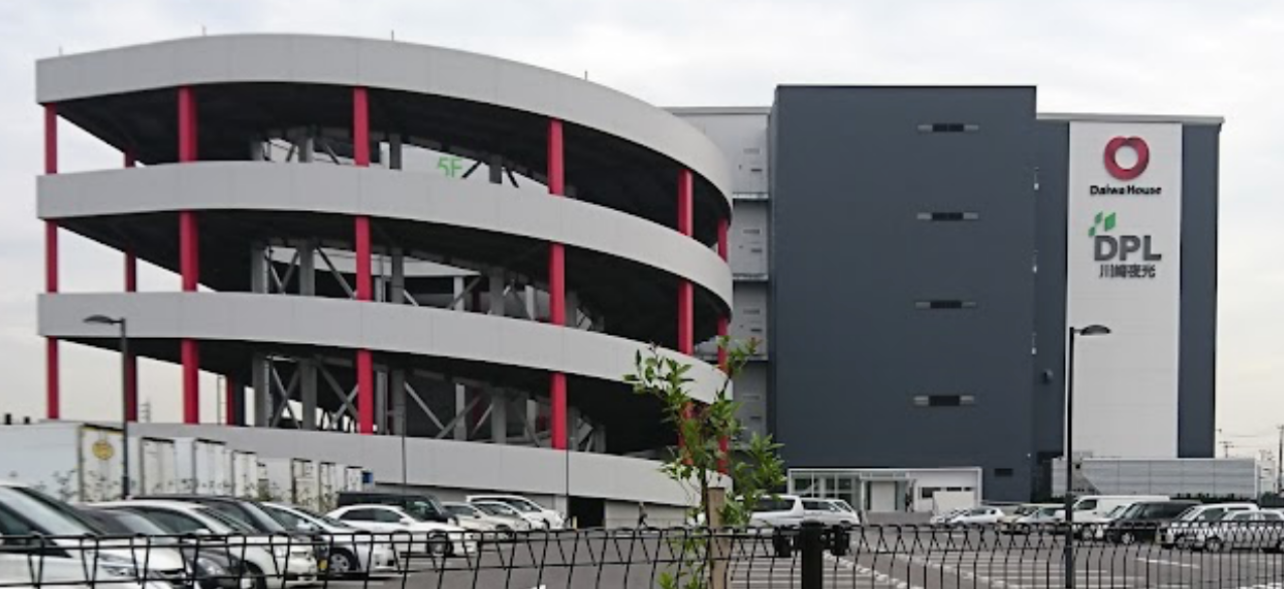
DHLT is a Singapore REIT established with the investment strategy of principally investing in a portfolio of income-producing logistics and industrial real estate assets located across Asia. The initial portfolio of DHLT (the “IPO Portfolio”) will comprise 14 high quality modern logistics properties in Japan with an appraised value of approximately JPY 80,570.0 million or S$952.9 million and an aggregate net lettable area (“NLA”) of approximately 423,920 square metres (“sq m”).

Three reasons why I am staying away from DHLT:
There are some points that I do not feel comfortable when it comes to DHLT. 

(1) DHLT is supposedly from a renowned sponsor Daiwa House Industry Co Ltd which is one of the largest construction and real estate development companies in Japan.
It is stated that the sponsor Daiwa House Industry Co Ltd is one of the largest real estate developer in Japan. In addition, it is also listed on the Tokyo Stock Exchange. Unfortunately, I am not familiar at all with Daiwa House. This is different from property groups like Lendlease listed on the Australian Stock Exchange. I will prefer to monitor its financial performance  for some time first before taking up a small stake in it for diversification. 

(2)  Some reviews reported that DHLT is a Japan-focused logistics REIT. This is not true.
DHLT is not a pure Japan-focused REIT. The sponsor intend to recycle its Indonesian, Malaysian and Vietnamese properties via DHLT in the near future. I do have personal doubts on the quality of such overseas assets. It gets very tricky when we deal with such overseas market properties. Not every REIT has the expertise of long standing groups like Mapletree. Will unit-holders end up with the shorter end of the stick?

(3) Will the REIT do well in rental collection in the face of deflation challenges in Japan's economy
The current property bubble and debt crisis in China reminds me of the same for Japan back in 1990s. Japan's "Lost Decade" was a period that lasted from about 1991 to 2001 that saw a significant slowdown in Japan's previously bustling economy. The Japanese's battle with deflation and the liquidity trap is a long drawn one that unfortunately still affects Japan even today. 

Parting thoughts on this IPO
For now, I think I will be staying away from DHLT as alluded to my discomfort over the 3 points listed above. Note that DHLT public tranche subscription will end by 24 November 2021 (Wed) 12pm. The REIT will commence trading on 26 November 2021 (Friday) 2am. Will this IPO flopped upon 1st day of trading or will it rise sharply?